The Lingering Smell of Smoke: Why Winter Air Makes Fire Odors Stick to Your Furniture and How We Get It Out
The Lingering Smell of Smoke: Why Winter Air Makes Fire Odors Stick to Your Furniture and How We Get It Out
![[HERO] The Lingering Smell of Smoke: Why Winter Air Makes Fire Odors Stick to Your Furniture and How We Get It Out](https://cdn.marblism.com/NwdIiIXZpNM.webp)
When a cold front finally pushes through Southern Louisiana, most of us are just happy to turn off the AC and maybe light a fire in the fireplace or pull out the space heaters. But winter in places like Lafayette, Lake Charles, and Baton Rouge brings its own set of risks. Whether it’s a kitchen mishap during a holiday meal, a chimney issue, or an electrical short from an overworked heater, fire damage happens.
Once the fire is out and the fire department leaves, you’re left with a mess that goes beyond just charred wood or soot. There’s a smell that seems to bake itself into the very bones of your house. If you’ve ever wondered why that smoke odor feels ten times worse when it’s cold and damp outside, you aren't imagining it. There is a specific science to why winter air in the Gulf South makes fire odors stick to your furniture like glue, and why a can of air freshener isn't going to do a thing to fix it.
The Science of Smoke: It’s Not Just a Scent
To understand why the smell lingers, you have to understand what smoke actually is. It’s not just "dirty air." Smoke is a complex mixture of gases, water vapor, and tiny solid particles. These particles are made up of whatever was burning: wood, plastic, carpet fibers, or kitchen grease.
When things burn, they release resins and oils. These microscopic droplets are extremely "sticky." They float through the air and land on every surface in your home. In the summer, our high heat can sometimes keep these particles more active, but in the winter, the physics of your home changes.
When you have a fire in the winter, your home is usually sealed up tight to keep the heat in. This means there’s zero ventilation. Those smoke particles have nowhere to go. They circulate through your rooms, getting pulled into the HVAC system and settling deep into the fibers of your couch, your curtains, and even your clothes.
Why the Louisiana Winter Makes it Worse
In other parts of the country, winter air is bone-dry. But in Southern Louisiana, our "cold" is almost always damp. That high humidity plays a massive role in fire damage restoration in Southern Louisiana.
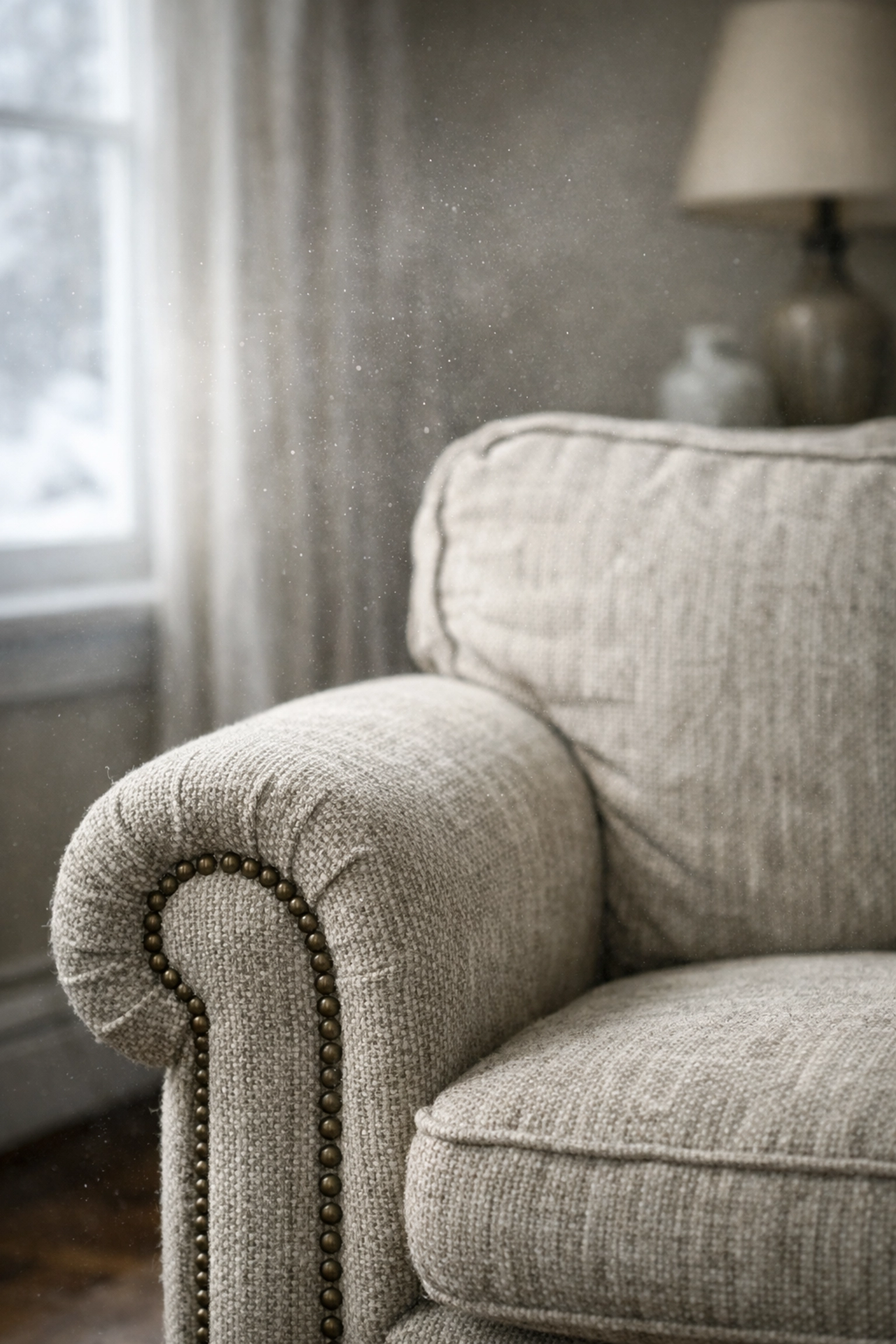
Moisture in the air acts as a carrier for smoke particles. Think of it like this: in dry air, a dust particle might just bounce off a surface. In damp air, that particle gets wrapped in a tiny bit of moisture, making it heavier and stickier. When that damp, smoke-laden air hits your fabric sofa or your mattress, it doesn’t just sit on top. The moisture helps pull the smoke deep into the pores of the material.
Once those particles are buried inside the foam of your cushions or the weave of your rugs, they are protected from the air. This is why you can scrub your walls and floors, yet the room still smells like a campfire three weeks later. Every time someone sits on the couch, they "puff" those trapped particles back into the air.
The Porous Material Problem
If your house was made entirely of glass and steel, smoke wouldn't be much of a problem. You’d just wipe it down with a degreaser and move on. But Southern Louisiana homes are full of porous materials. Wood, drywall, upholstery, and insulation are all basically giant sponges.
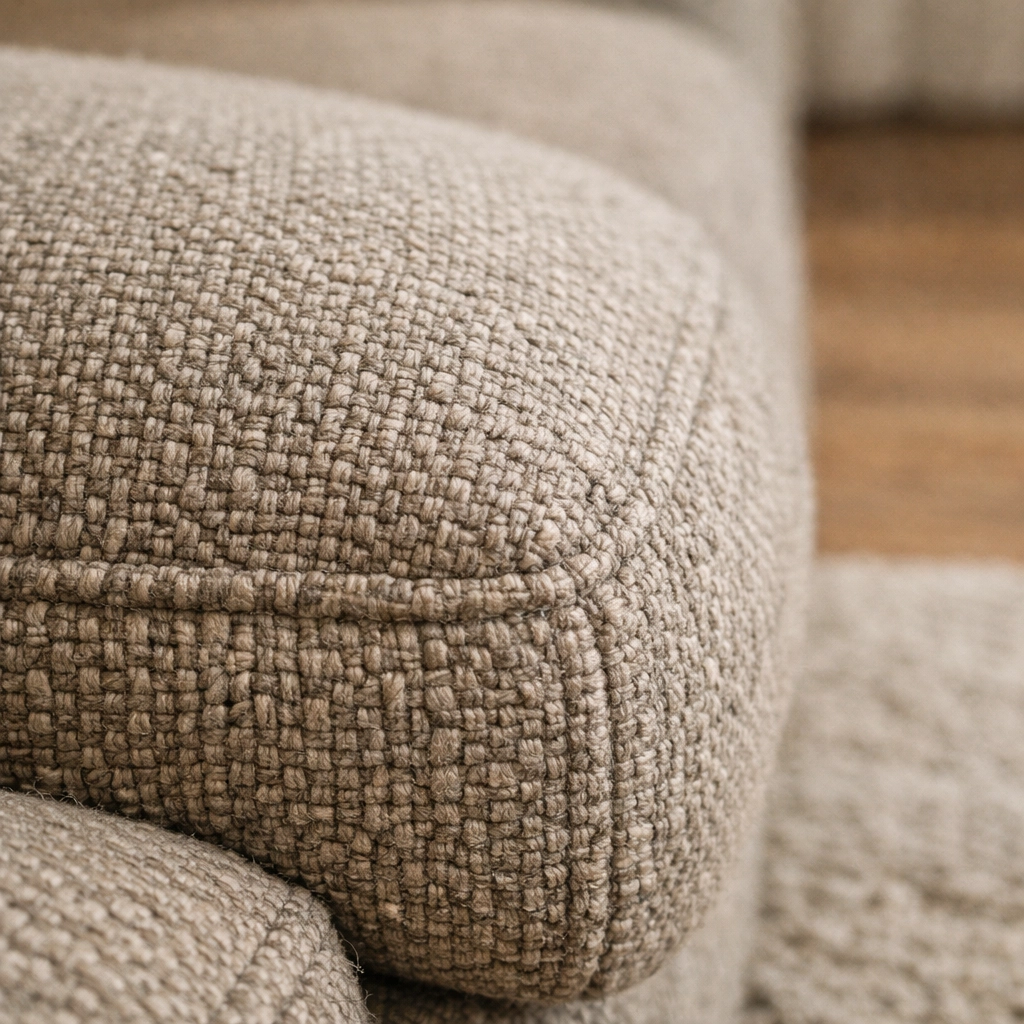
When smoke odor removal becomes necessary, we have to look at the "pore structure" of the items in the room. Furniture is the biggest offender. Modern furniture is often made of synthetic blends and open-cell foam. These materials are designed to breathe, which is great for comfort, but terrible during a fire. The smoke enters the foam, and because the winter air is dense and damp, those odor-causing molecules get trapped in the microscopic pockets of the material.
If you had a fire that required water to put it out, you have a double-whammy. The water increases the humidity instantly, driving the smoke deeper into the furniture. Plus, if that furniture isn't dried out properly and professionally, you're looking at a high risk of mold growth. If you’re dealing with secondary water issues from a fire, you might want to check out our info on water damage restoration to see how that moisture affects your home’s structure.
Why the Heater Makes it Sneaky
In the winter, your HVAC system is the engine that drives smoke odor throughout the house. Even if the fire was contained to the kitchen, the return air vent likely sucked up those smoke particles and blasted them into every bedroom.
As the air travels through the ducts, it cools down and warms up. This temperature cycling can cause the ductwork to expand and contract, which can actually help "lodge" soot and odor into the dust and debris already sitting in your vents. Then, every time the heater kicks on, you get a fresh reminder of the fire. This is one of the main reasons winter fire odors seem so persistent: they are literally being redistributed by your furnace.
The "Masking" Myth
The biggest mistake people make is trying to handle smoke smell in furniture with store-bought sprays or "natural" remedies like bowls of vinegar or baking soda. While baking soda can pull some surface odors out, it can’t reach the smoke particles trapped four inches deep in a chair’s foam.
Most sprays are just masking agents. They use a heavy perfume to overwhelm your nose so you don't smell the smoke. But molecules of smoke are physically still there. As soon as the perfume wears off, the smoke odor returns. In some cases, the chemicals in the air freshener can actually react with the soot particles and create a "ghosting" effect or a sticky residue that’s even harder to clean.
How Professionals Actually Get the Smell Out
At Drymax, we don’t just try to hide the smell; we remove the particles or change their chemical makeup so they no longer produce an odor. Real fire damage restoration involves a few heavy-duty steps that you just can’t do with DIY tools.
1. HEPA Air Scrubbing
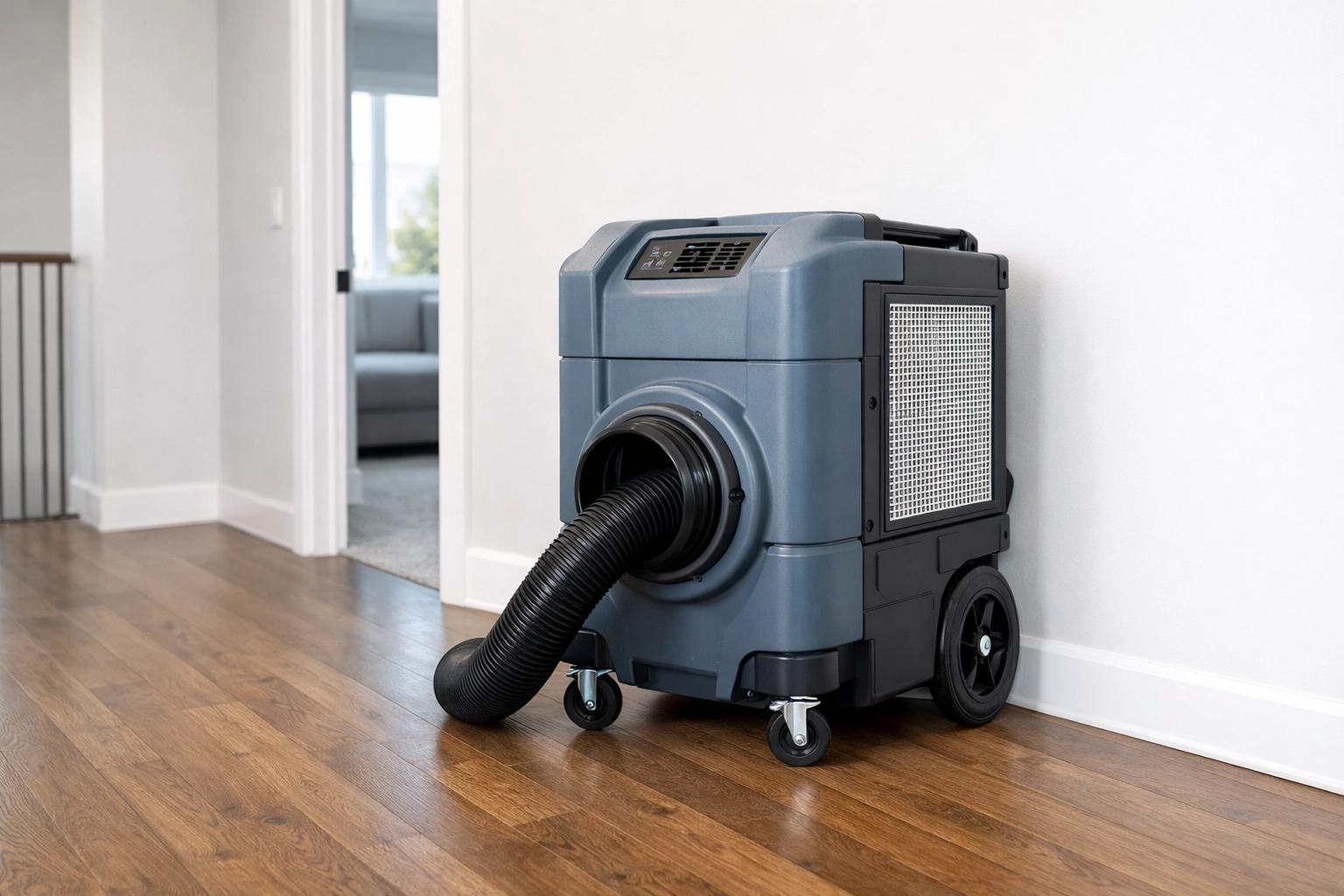
We use industrial-grade air scrubbers equipped with HEPA filters. These aren't your typical home air purifiers. They move a massive volume of air and trap particles as small as 0.3 microns. By cleaning the air itself, we stop the "re-contamination" of your furniture.
2. Hydroxyl Generators
In many cases, we use hydroxyl generators. These are fascinating pieces of tech. They mimic a natural process that happens in our atmosphere when the sun’s UV rays hit water vapor. They create hydroxyl radicals that move through the house and "disassemble" the odor molecules. The best part? Unlike ozone, hydroxyls are safe to use while people and pets are in the house. This is a game-changer for getting smells out of deep upholstery.
3. Thermal Fogging
Sometimes, the smoke has traveled into every crack and crevice. We use a thermal fogger that creates a "smoke" of its own: a deodorizing mist with particles the same size as the fire smoke. This allows the neutralizer to follow the exact same path the smoke took, reaching deep into wall cavities and furniture padding.
The Hidden Danger: Mold and Smoke
In South Louisiana, you can’t talk about fire without talking about moisture. If the fire department had to use hoses, or if your pipes took damage, that water is sitting in your floors and walls. In the winter, things don't dry out as fast.
If you leave that moisture alone while trying to figure out the smoke smell, you’re going to end up with a mold problem within 24 to 48 hours. Mold spores love the organic material in your furniture just as much as smoke does. If you notice a musty smell mixing with the smoke, you should look into our mold remediation services immediately. Smoke is a nuisance, but mold is a health hazard.
Dealing with the HVAC
We also have to address the "lungs" of your home. If the smoke got into the vents, we have to clean the ductwork and the coils in your air handler. If you don't do this, all the work we do on your furniture will be for nothing the next time the thermostat clicks on. We ensure the entire system is decontaminated so you aren't breathing in soot and ash for the rest of the winter.
When to Call in the Pros
If you’ve had a fire, don't wait for the smell to "go away on its own." It won't: especially not in the humid winter air of the Gulf Coast. The longer those particles sit in your furniture, the more they "set" into the fibers. Acidic soot can actually eat away at the fabric of your chairs and the finish on your wood tables if left too long.
We handle these situations every day across Southern Louisiana. We know the local climate and we know how to handle the specific challenges our humidity presents. If you're struggling with a lingering odor, or if you just need a professional eye to tell you what can be saved and what needs to go, feel free to contact us.

Final Thoughts for Louisiana Homeowners
Living down here means we deal with some unique environmental factors. Our winters aren't just about the temperature; they’re about the dampness. That dampness is the best friend of smoke odors and the enemy of your furniture.
If you want to learn more about keeping your home safe and dry during the "off-season," our blog has plenty of resources on everything from slab leaks to humidity control.
Don't let a small kitchen fire or a chimney mishap ruin your winter. Get the smoke out properly the first time, and you won't have to deal with that campfire smell every time the humidity hits 90% for the rest of the year. We’re here to help you get things back to normal, serving the communities from the Atchafalaya Basin over to the Texas line. Give us a shout if you need us.