Spring Rains in Southern Louisiana - How Small Leaks Turn Into Big Problems
Spring Rains in Southern Louisiana - How Small Leaks Turn Into Big Problems
![[HERO] Spring Rains in Southern Louisiana - How Small Leaks Turn Into Big Problems](https://cdn.marblism.com/sIMQ3cc9dpc.webp)
If you live in Southern Louisiana, you know that spring isn’t just about blooming azaleas and crawfish boils. It’s the season where the sky decides to dump three inches of water in twenty minutes, usually right when you’re trying to get home on the I-10. Around Lafayette, Lake Charles, and down through New Iberia, we don't really have "showers." We have deluges.
In my line of work, spring is the busiest time of the year. I spend my days crawling through attics in Ville Platte and pulling up wet baseboards in Baton Rouge. Most people think our biggest jobs come after a named storm or a massive flood, but that’s not always the case. Some of the worst water damage Southern Louisiana homes face starts as a tiny, ignored drip during a standard Tuesday afternoon thunderstorm.
This is what we see every year. It’s a predictable cycle of high heat, torrential rain, and the kind of humidity that makes it feel like you’re breathing through a wet sponge. When you combine those factors with a small gap in your roof or a failed window seal, you aren’t just looking at a minor repair. You’re looking at a full-scale restoration project.
The Myth of the "Small Stain"
I can’t tell you how many times I’ve walked into a home in Acadiana and had a homeowner point to a faint, tea-colored circle on their ceiling. Usually, they say something like, "It’s been there for a month, it hasn't really gotten any bigger."
Here is the problem: what you see on the ceiling is only about 5% of the story. By the time the water has saturated through the backside of the drywall, soaked through the paint, and become visible to you, the area above that ceiling is a mess.
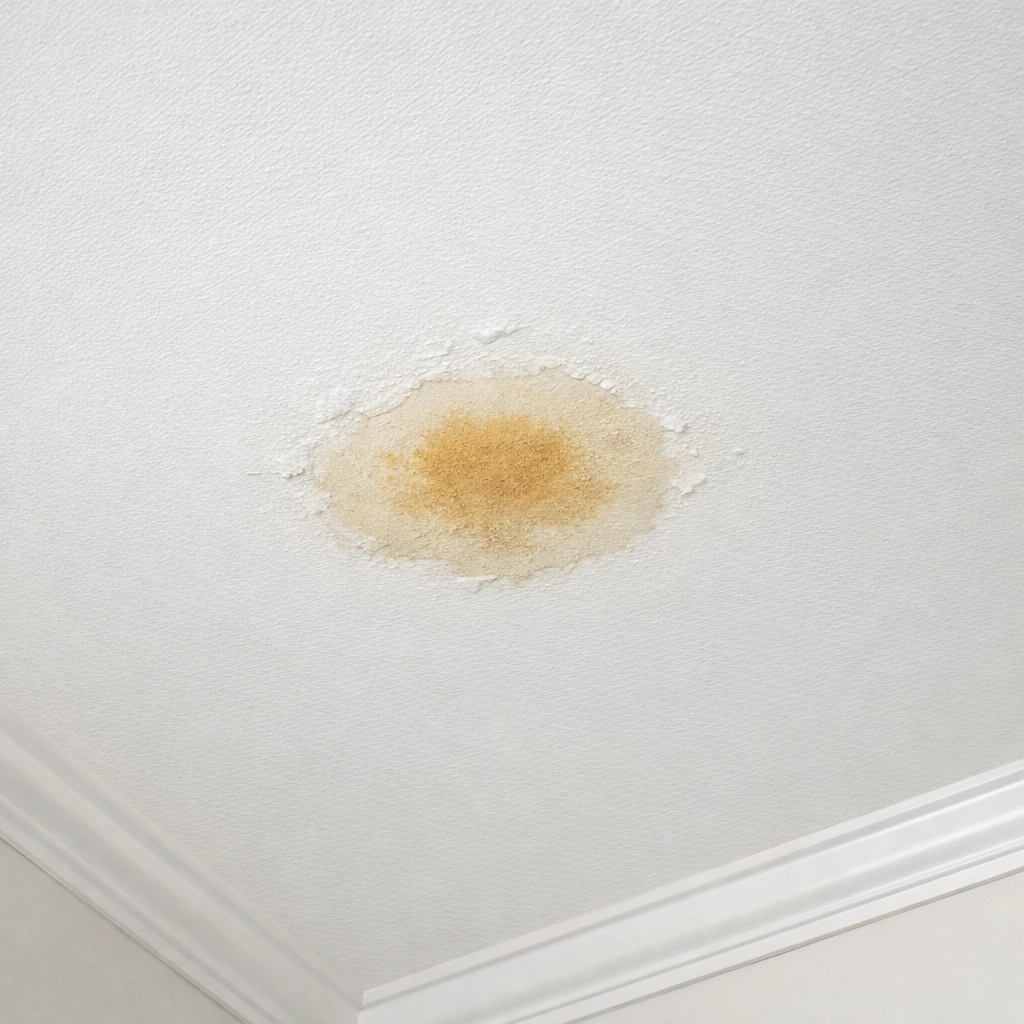
In Southern Louisiana, we deal with a lot of blown-in insulation. When a roof leak starts, that insulation acts like a giant, heavy sponge. It sits there, holding onto moisture for days or weeks. Because our attics are basically ovens, that wet insulation creates a perfect incubator for mold. By the time that "small stain" appears, I’ve often found that the ceiling joists are already covered in microbial growth and the drywall is structurally compromised.
If you see a spot, don't wait for the next rain to see if it "gets worse." It’s already worse than it looks. Check out our service areas to see if we’re in your neighborhood, because catching these leaks early is the only way to avoid a massive headache.
Why Your Roof Fails in the Spring
You might wonder why a roof that survived a hurricane in the fall starts leaking during a spring rain. It usually comes down to the Louisiana sun.
Last summer, we probably had thirty days in a row of 100-degree weather. That heat bakes your shingles until they become brittle. They expand and contract, and the oils in the asphalt dry out. When the first big spring systems roll through with heavy winds and sideways rain, those weakened shingles can’t handle the pressure.
Wind-driven rain is a huge factor here. It doesn't just fall down; it gets pushed up and under the laps of your shingles or into the flashing around your chimney. This is a common cause of roof leak damage that goes unnoticed. If your gutters are backed up: which they usually are after the winter: the water has nowhere to go. It backs up under the eaves and finds a way into your soffits.
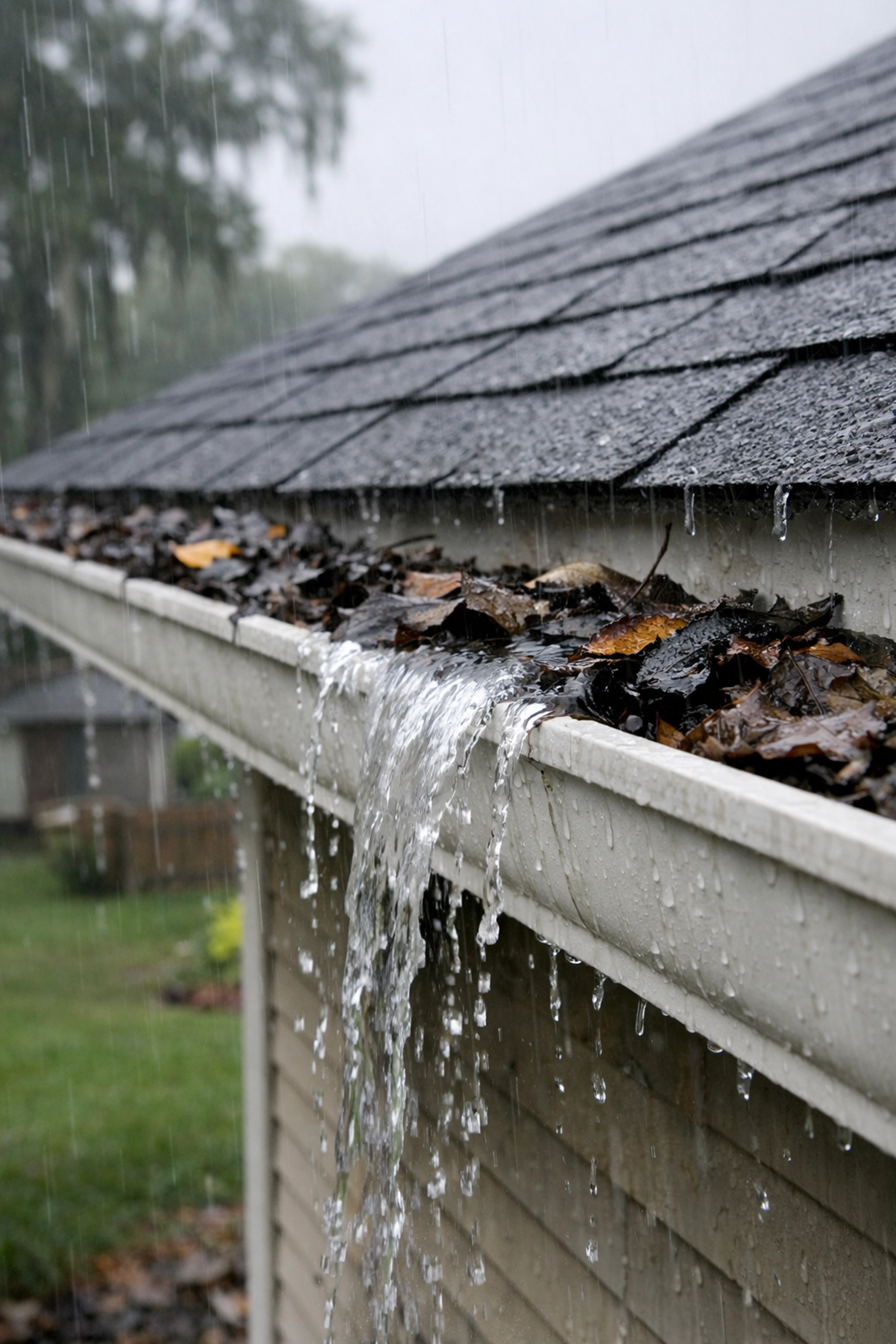
Once the water is in, it follows the path of least resistance. It runs down a rafter, maybe drips onto some family heirlooms you’ve got stored up there. If you're worried about items you have stored in the attic getting hit by a leak, you might want to read our post on how we rescue water-damaged photos and family treasures. It’s a lot easier to prevent the damage than it is to fix it after the fact.
Windows, Doors, and Hidden Entry Points
It’s not always the roof. In places like Lafayette and Lake Charles, we get a lot of rain that hits the side of the house horizontally. If the caulking around your windows has cracked over the winter, or if your door seals are worn out, that water is going straight into your wall cavity.
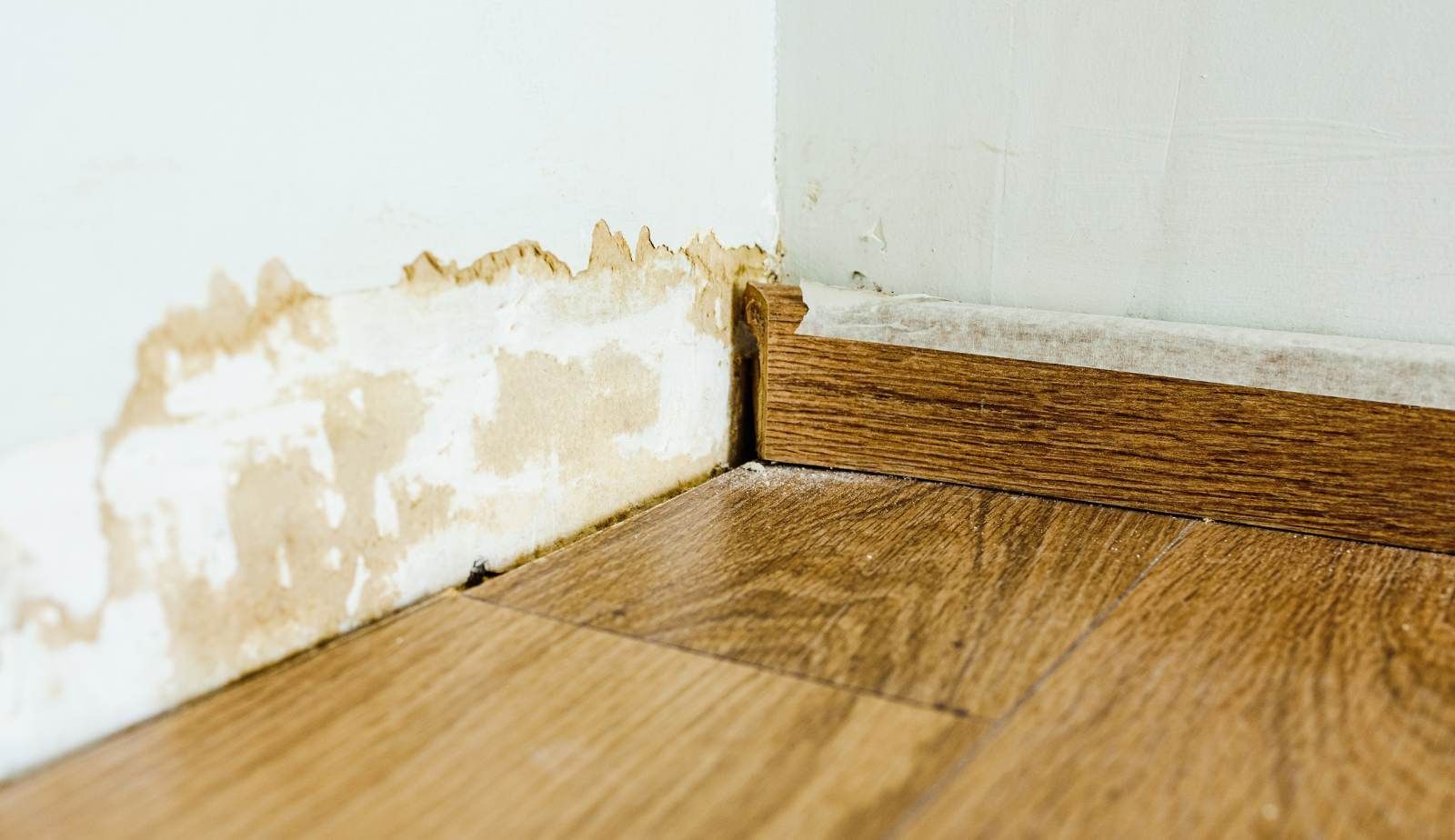
What happens next is what I call the "baseboard surprise." The water seeps down inside the wall, pools at the bottom on the floor plate, and soaks into the back of your baseboards. Since most modern baseboards are made of MDF (compressed sawdust and glue), they soak up water like a wick.
Because the front of the baseboard is painted with semi-gloss paint, it might look fine. But behind it? It’s a different world. We often pull back a baseboard to find thick, fuzzy mold growth that’s been there for weeks. This is why mold remediation in Acadiana is so common in the spring. Those "spring rain leaks" are consistent enough to keep the wood wet but small enough that you don't see a puddle on the floor.
The Louisiana Humidity Factor: Why Nothing Dries on Its Own
This is the part that people from up north don't get. In other parts of the country, if you get a little water on the floor, you can crack a window, turn on a fan, and it’ll be dry by morning.
In Southern Louisiana, the outdoor humidity is often 90% or higher during the spring. If you crack a window, you aren't letting moisture out; you’re letting more in. When materials like drywall, plywood, or carpet get wet here, the air is already so saturated with moisture that evaporation almost stops.
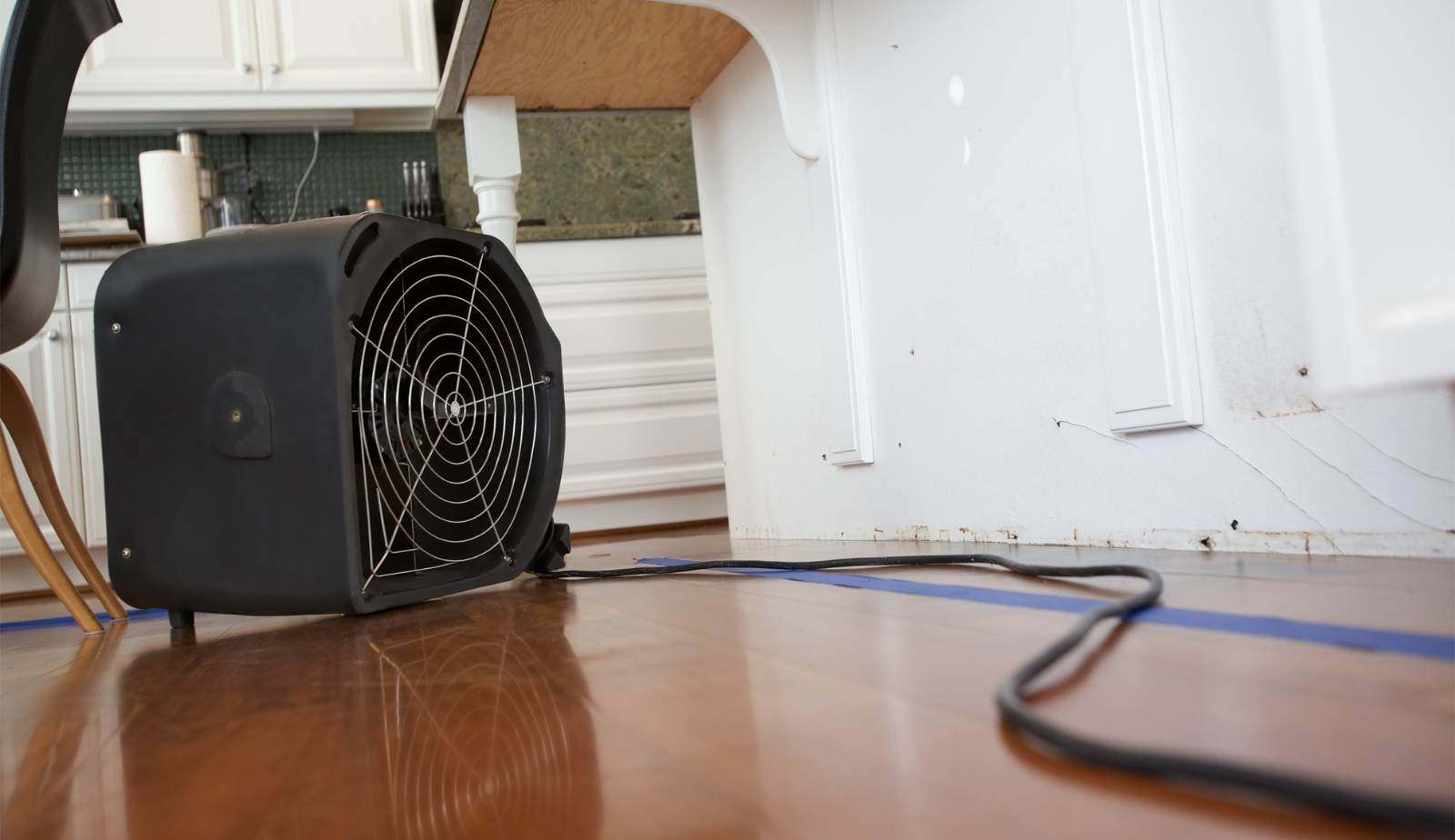
Without professional-grade dehumidifiers and air movers, that wet spot stays wet. And in our climate, mold starts growing within 24 to 48 hours. If a leak happens on a Friday and you don't deal with it until Monday, you aren't just looking at a Lafayette water restoration job: you’re looking at mold removal.
It’s also worth noting that it’s not just the rain. Sometimes the humidity itself causes the problem. If you’ve been running your AC hard during a humid spring day, you can get condensation issues in the attic that look exactly like a roof leak. We’ve covered this before in our blog about why running your heater or AC can cause moisture buildup in a cold attic. It’s all part of the same puzzle.
What We See Inside the Walls
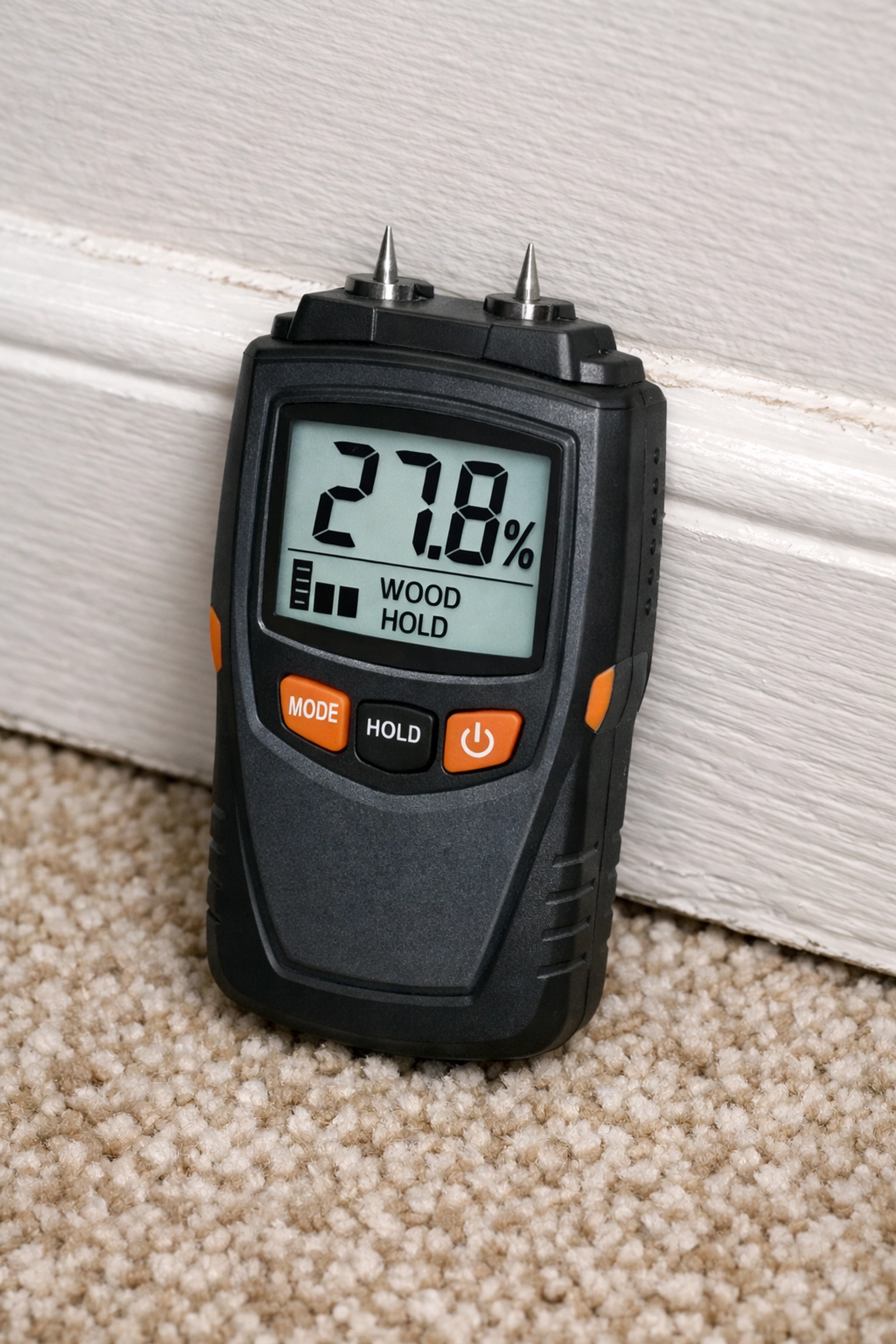
When we get called out to a house with a suspected leak, we don't just guess. We use moisture meters and thermal imaging cameras to see what’s going on where you can’t see.
I’ve had jobs where the homeowner thought they had a tiny leak under the kitchen sink. After I put a meter on the wall, I realized the water had traveled six feet in both directions behind the cabinets. When we pulled the cabinets out, the entire wall was black.
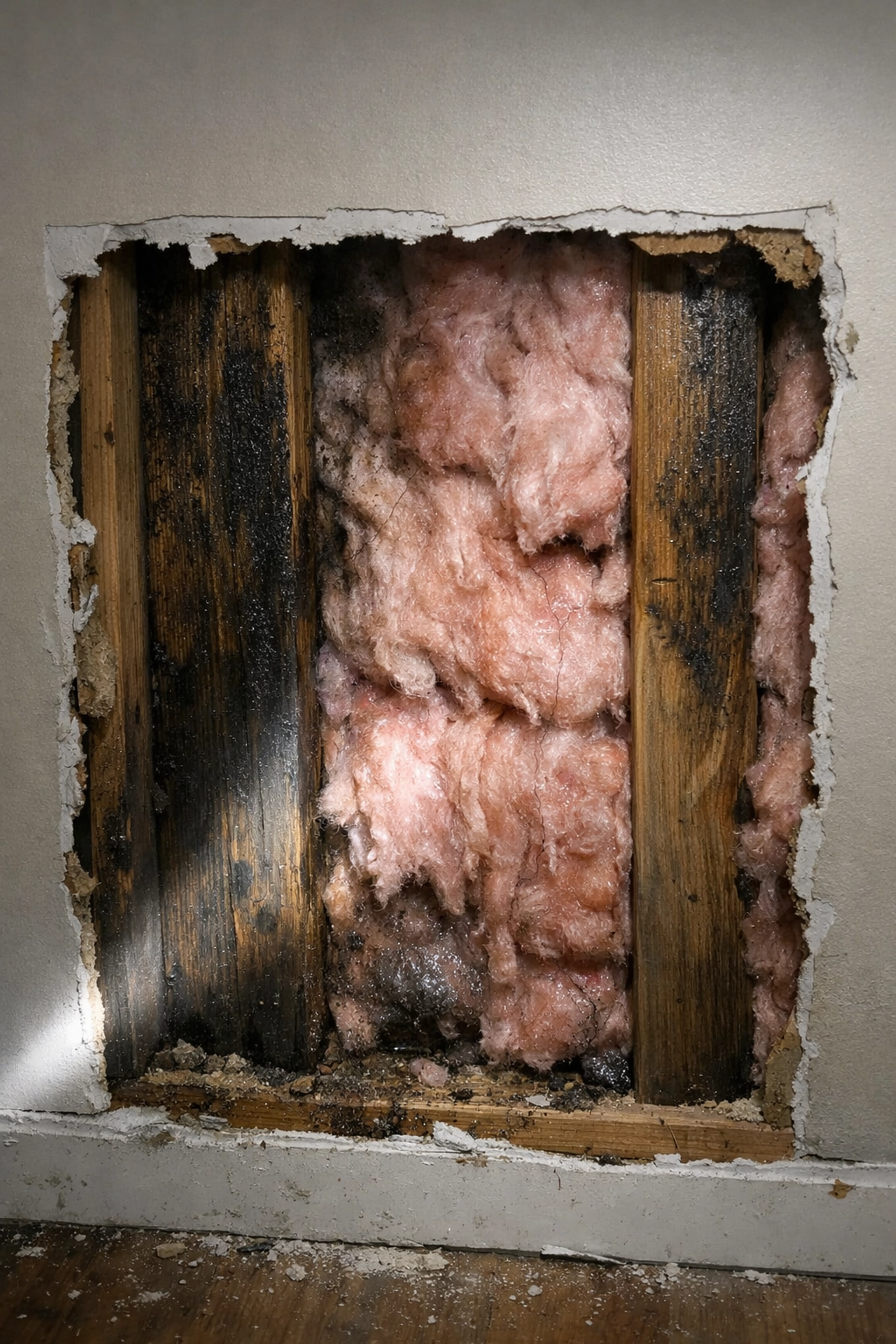
The problem with "small" leaks is that they are persistent. A pipe that drips once every ten seconds or a window that lets in a tablespoon of water every time it rains is actually more dangerous than a major flood. Why? Because a major flood gets immediate attention. A small leak is a slow burn. It rots the studs, ruins the contents of your home, and creates an indoor air quality nightmare before you even realize you have a problem.
How to Protect Your Home This Spring
I’m a technician, not a salesman, so I’m going to give you the same advice I give my friends and family here in Southern Louisiana. You don't need to spend a fortune, you just need to pay attention.
- Gutter Maintenance: I know, it’s a chore. But if your gutters are full of leaves and pine needles, water will back up under your roof. Make sure the downspouts are carrying water at least five feet away from your foundation.
- The Attic Walk: Twice a year: once in the spring and once in the fall: grab a flashlight and go into your attic while it’s raining. Look for wet rafters, damp insulation, or the smell of mildew. If you catch a leak while it’s still in the attic, you save yourself the cost of replacing a ceiling.
- Check Your AC Drain Line: This is a huge one in Louisiana. If your primary drain line clogs (and they always do), the secondary pan should catch the water. If that pan is rusted or the safety switch fails, you’ll have water coming through your ceiling.
- Inspect Your Perimeter: Walk around your house. Look for cracks in the brick, gaps in the siding, or areas where the soil is sloping toward the house instead of away from it.
- Don't Ignore the "Old" Stain: If you moved into a house and it had a water stain that the previous owner said was "old," verify it. Get a moisture meter or just keep a close eye on it during a storm. If it changes shape or color, it’s active.
Preventing Mold After the Rain
The key to preventing mold after rain is speed. If you do have a leak, you have a very narrow window to get it dry before mold takes root.
If you find a wet spot, the first thing you should do is stop the source if possible. Put a tarp on the roof or a bucket under the drip. Then, call someone who actually has the equipment to dry it out. A household fan isn't going to cut it against Louisiana humidity.
At Drymax Restoration, we see the same stories every spring. We see the frustration of a homeowner who realized too late that a $50 caulking job turned into a $5,000 remediation project. We’re here to help when things go wrong, whether it’s a flooded living room or a moldy closet.
Don't Wait for the Big One
Southern Louisiana is a beautiful place to live, but our environment is tough on buildings. The combination of "April showers" and the start of the humid season is the ultimate test for your home’s exterior.
If you suspect you have a leak, or if you’ve found a spot that looks suspicious, give us a call. It’s a lot cheaper to have a technician come out and tell you that everything is dry than it is to wait six months and find out your wall studs have turned to mush.
Whether you’re in Lafayette, New Iberia, or anywhere in the Acadiana area, stay dry this spring. Keep those gutters clean, watch those ceilings, and don't let a small leak turn into a big problem. If it does, you know where to find us. We've seen it all before, and we've got the tools to get your home back to normal.