Slab Leaks & Temperature Swings: How Southern Louisiana Freezes Trigger Under-Slab Plumbing Failures
Slab Leaks & Temperature Swings: How Southern Louisiana Freezes Trigger Under-Slab Plumbing Failures
![[HERO] Slab Leaks & Temperature Swings: How Southern Louisiana Freezes Trigger Under-Slab Plumbing Failures](https://cdn.marblism.com/bEM54g4lugU.webp)
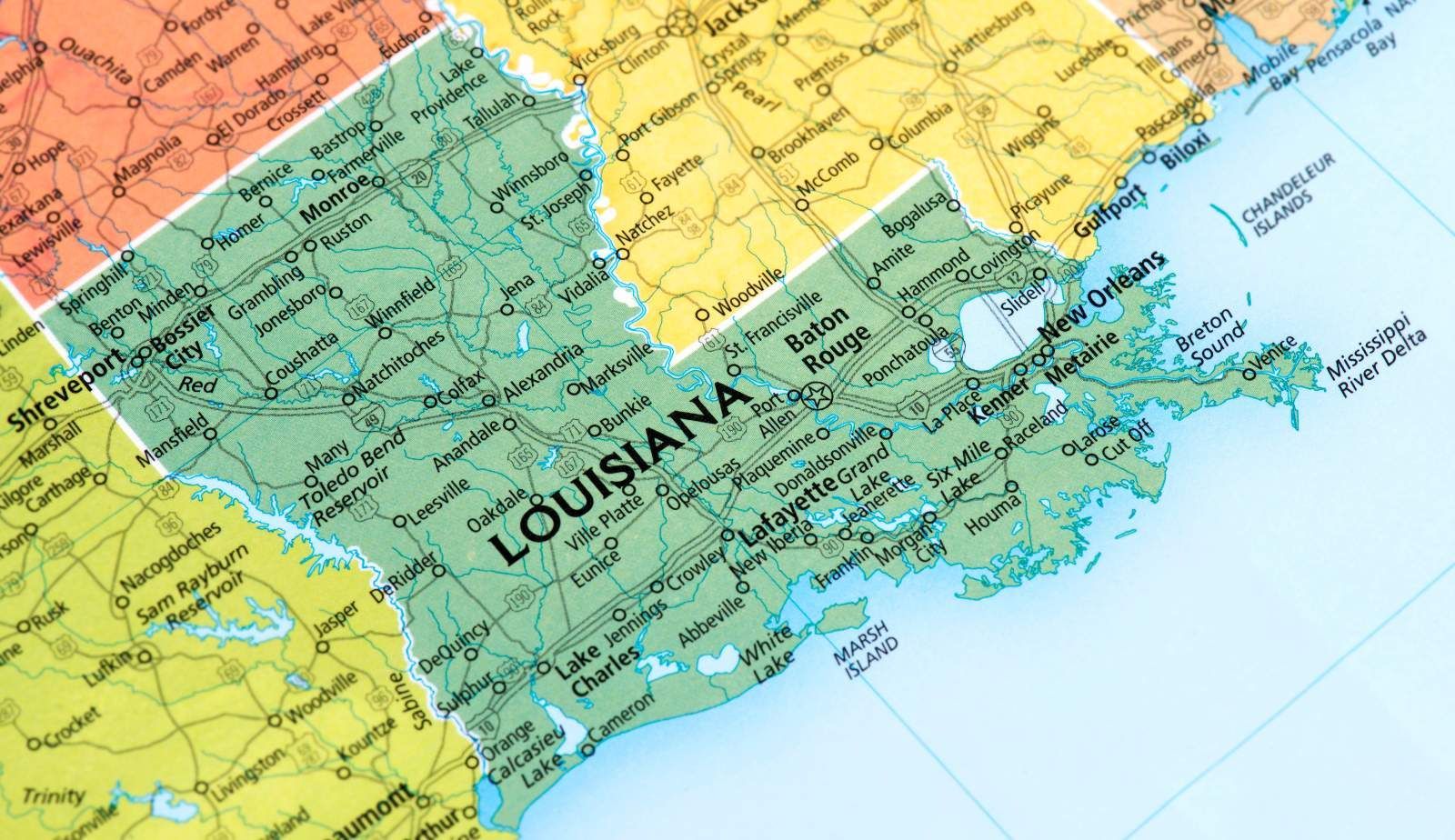
Southern Louisiana isn’t exactly known for hard winters. Most years, Lafayette, Lake Charles, and Baton Rouge might get a cold snap or two, and that’s about it. But when a sudden freeze hits: especially after weeks of warm, humid weather: it can expose weak spots in plumbing that’s already dealing with tough conditions under your slab.
This post breaks down how temperature swings and freezes can help trigger under-slab plumbing failures (slab leaks) in South Louisiana, why our soil and foundations make it worse, what signs to watch for, and what to do if you suspect a leak. The goal here isn’t to scare you: it’s to help you catch problems early before they turn into a full-blown water damage restoration situation.
If you’re already seeing water where it shouldn’t be, start here: Drymax water damage restoration in Louisiana: https://www.drymaxrestoration.com/water-damage-restoration/
What a “slab leak” actually is (in plain terms)
Most homes in this part of Louisiana are built on a concrete slab. That means a lot of plumbing lines: water supply lines and sometimes drain lines: run in or under the slab.
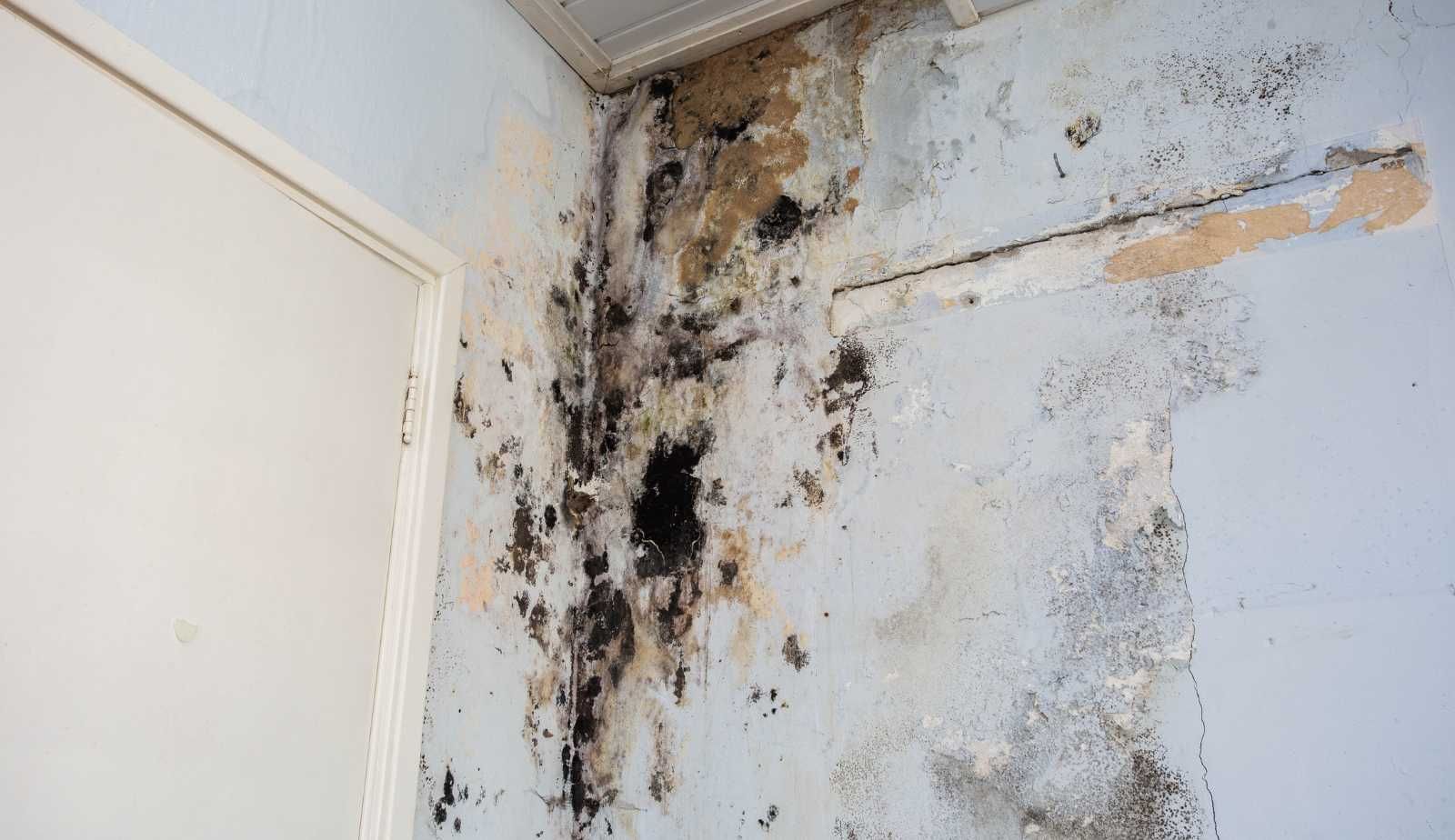
A slab leak is just a leak that happens in those buried lines. The reason it’s a big deal isn’t the leak itself: it’s the location. When water is leaking under concrete, you can’t usually see it right away. Water can spread under the slab, soak the soil, push moisture into flooring, and create conditions where mold can take off.
Here’s what makes slab leaks so nasty:
- They can run for days or weeks before you realize what’s happening
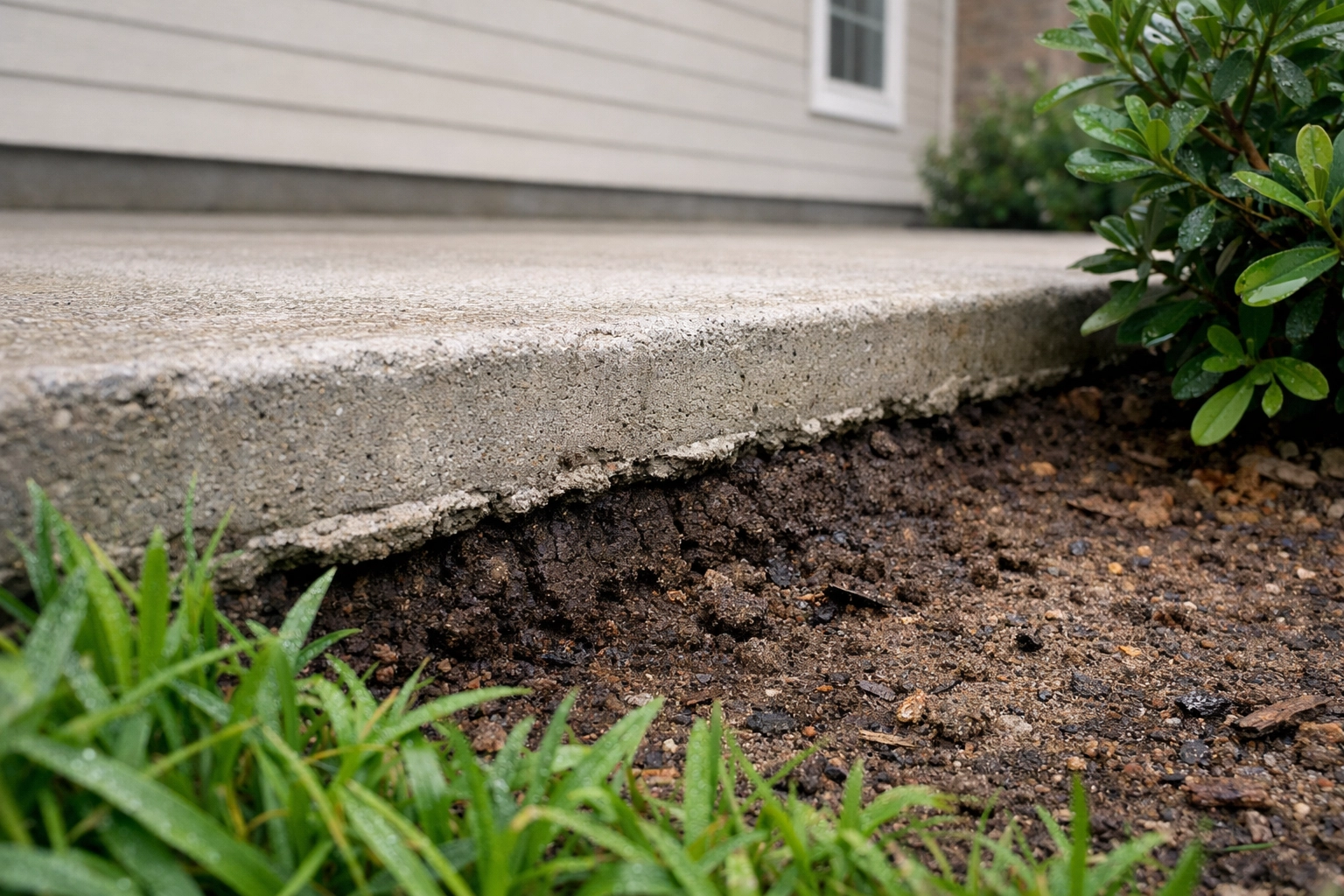
- The leak can undermine parts of the slab (soil erosion/voids)
- Moisture can climb into walls and floors
- If it goes long enough, you may end up needing drying, demolition, and mold remediation
Drymax also covers mold cleanup when moisture becomes a mold problem: https://www.drymaxrestoration.com/mold-remediation/
Why Southern Louisiana homes are already at higher risk
Even without freezes, slab leaks are common in Louisiana compared to a lot of the country. That’s not because everyone has bad plumbing. It’s because the environment is hard on foundations and pipes.
1) Clay-heavy soils that swell and shrink
A lot of South Louisiana has clay-rich soils. Clay expands when it’s wet and shrinks when it dries. With our rain patterns and humidity, that cycle can happen over and over.
That movement doesn’t always look dramatic. It can be subtle. But under a slab, subtle movement still creates stress on pipes.
2) Big moisture swings (rain, drought, and everything in between)
We can get soaking rain for days, then turn around and have a dry stretch. That changes moisture levels in the soil, which changes how the ground supports the slab.
3) Slab foundations don’t give you easy access
If you’ve got a crawlspace, you can sometimes spot pipe issues earlier. With a slab, the plumbing is “out of sight, out of mind” until the leak is big enough to show itself.
Where freezes fit in: it’s not just “frozen pipes,” it’s the sudden change
When people hear “freeze,” they picture pipes in attics or exterior walls freezing and bursting. That can happen here too (especially in older homes or places with exposed plumbing), but under-slab plumbing failures in Louisiana are usually more about stress than straight-up freezing solid under the house.
Here’s what a sudden freeze does in our climate:
Fast temperature drops create rapid expansion/contraction cycles
If it’s been 70° and humid, and then we drop into the 20s overnight, materials don’t “ease into” the change. The slab, the soil near the perimeter, and plumbing components all react differently.
- Concrete and metal/plastic expand and contract at different rates
- Joints and fittings are common weak points
- Existing tiny cracks can turn into real leaks
The perimeter is the danger zone
The edges of a slab are closer to outside air. In a hard freeze, the perimeter area can get colder faster than the center of the slab footprint, creating uneven stress. That uneven stress can transfer to pipes near the edges: especially where lines come up into walls.
Cold snaps can expose problems that were already brewing
A lot of slab leaks aren’t born in one dramatic moment. They’re the result of:
- aging pipe materials
- corrosion (depending on pipe type and water chemistry)
- abrasion on hot water lines (tiny movement over time)
- shifting soils and slab stress
A freeze can be the event that takes a “barely holding on” situation and turns it into an active leak.
Soil shifting + temperature swings: the one-two punch in Louisiana
Let’s connect the dots.
- Soils expand and contract with moisture changes
- That movement puts stress on the slab and anything passing through/under it
- Then a sudden freeze hits and you get another stress event (thermal contraction)
- Pipes or fittings that were already stressed finally fail
In Lafayette, Lake Charles, and Baton Rouge, this is a common pattern: a small weakness sits quietly for months, then a weather event (big rain, a dry spell, or a freeze) pushes it over the edge.
Common signs of an under-slab leak (don’t ignore these)
Slab leaks can look like a lot of different problems. Here are the signs that should make you pause.
Water bill jumps for no clear reason
If your usage goes up and nobody changed habits, that’s a red flag. A slab leak can run constantly.
Warm spots on the floor
If a hot water line is leaking under the slab, you may notice a warm area on tile, vinyl, or even carpet.
Random damp flooring, cupping, or loose tiles
Moisture can seep up through slab and underlayment. Flooring starts to tell the story:
- warped laminate
- buckling vinyl planks
- grout cracking or tiles loosening
- carpet feeling damp for no reason
Musty smells that won’t go away
Persistent damp smells often mean materials are holding moisture. And once you’ve got moisture, mold can follow.
If you’re dealing with musty odors or visible growth after water issues, Drymax’s mold page is here: https://www.drymaxrestoration.com/mold-remediation/
Cracks in walls or flooring that seem “new”
Not every crack means a slab leak, but slab leaks can contribute to soil movement under the foundation, which can show up as new cracks.
Running water sound when nothing’s on
Sometimes you can hear it: especially at night when the house is quiet.
Lower water pressure
Depends on the leak location and severity, but it can happen.
Why slab leaks often turn into water damage (and sometimes mold)
A leak under the slab doesn’t stay politely under the slab.
Water moves. It spreads into the soil. It can migrate toward the path of least resistance. Then it starts affecting the house itself:
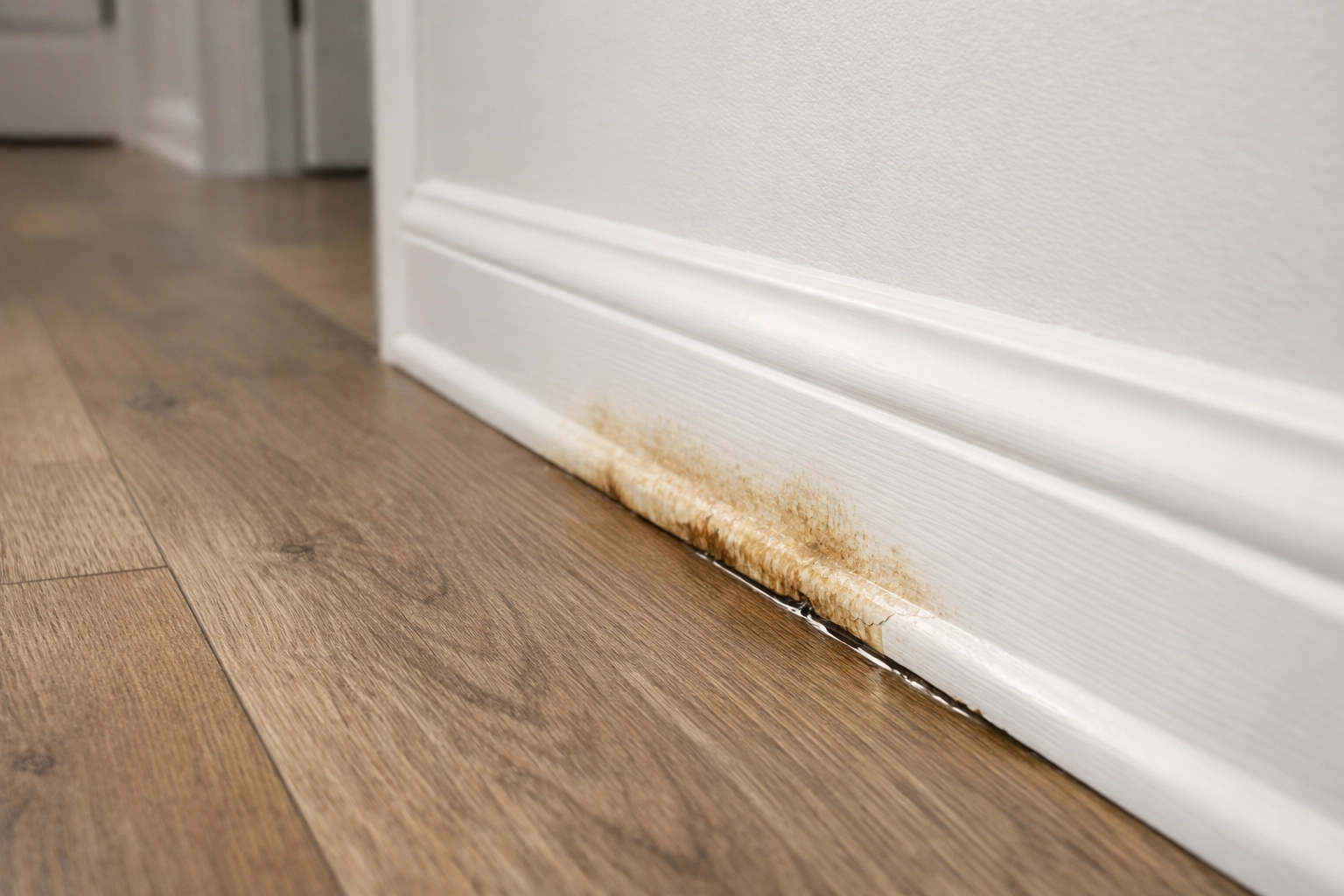
- baseboards absorbing moisture
- drywall wicking water upward
- flooring trapping moisture under it
- closets staying damp (low airflow)
If materials stay wet long enough, microbial growth can start. That’s why water damage restoration and mold remediation are often linked.
Water damage help: https://www.drymaxrestoration.com/water-damage-restoration/
Mold help: https://www.drymaxrestoration.com/mold-remediation/
What to do right after a freeze (simple homeowner checklist)
If your area just had a hard freeze: or even a borderline one: this is the time to do a quick check. It’s not complicated.
1) Check your water meter for “phantom usage”
Pick a time when no one will use water (no dishwasher, laundry, showers). Look at the meter, wait 10–15 minutes, and see if it moved.
- If it moved and nobody used water, you’ve likely got a leak somewhere.
- That doesn’t guarantee it’s under the slab, but it’s a strong clue.
2) Walk the house barefoot and pay attention
You’re looking for:
- unexpected warm spots
- dampness
- “spongy” flooring
- weird cold, clammy tile areas that weren’t there before
3) Look at baseboards and lower drywall
Swelling, staining, paint bubbling, or separation at seams can be early signs.
4) Smell-check closed rooms
Closets, spare rooms, and back bathrooms can hold odor longer. Musty smells often show up before visible damage.
5) If you suspect a leak, don’t keep “waiting to see”
A slab leak doesn’t typically fix itself. Time is what turns a manageable problem into a bigger repair.
If you need to get someone out quickly, Drymax contact page: https://www.drymaxrestoration.com/contact-us/
“Is a freeze really enough to cause this in Louisiana?”
Sometimes yes, but usually it’s a trigger: not the only cause.
In colder states, deep freezes can cause frost heave in soil and freeze pipes solid. In Southern Louisiana, freezes are typically shorter. But the sudden swing matters because:
- homes and plumbing aren’t always built/insulated for extended freezing temps
- the slab perimeter and exposed penetrations can get hit hard
- temperature change can stress fittings and joints quickly
- existing corrosion/abrasion issues can fail under stress
So the freeze is often the moment the problem becomes obvious.
How under-slab plumbing typically fails (the common mechanics)
There are a few repeat offenders when it comes to under-slab leaks:
Abrasion and movement on hot water lines
Hot water lines expand slightly when hot water runs, then contract when they cool. Over years, tiny movement plus contact with surrounding material can wear a spot thin: especially if the pipe is rubbing against something.
Corrosion (depends on material and water chemistry)
Copper can corrode in certain conditions. Galvanized plumbing ages out. Even newer materials can fail if installation isn’t right.
Stress at joints, elbows, and transitions
Straight pipe sections tend to hold up better than fittings. Places where a pipe changes direction or material are common failure points.
Foundation/soil movement
When soil shifts under a slab, that movement transfers to anything embedded or resting in that area. Pipes weren’t designed to be structural members: but they often get treated like they are.
Why you shouldn’t ignore “minor” water damage signs after a cold snap
A lot of people notice a small issue and try to monitor it:
- a tiny stain
- a faint smell
- one loose tile
The problem is, slab leaks can keep feeding moisture into the house. Even if the visible sign stays small, the wet area underneath can be getting bigger.
From a restoration standpoint, early action can mean:
- less demo
- less drying time
- less chance of mold
- less chance of flooring replacement
If water has been present long enough, mold might need to be part of the plan: https://www.drymaxrestoration.com/mold-remediation/
What a professional response usually looks like (without the sales pitch)
If you call in a restoration team because you suspect a slab leak, the work generally follows a logical order:
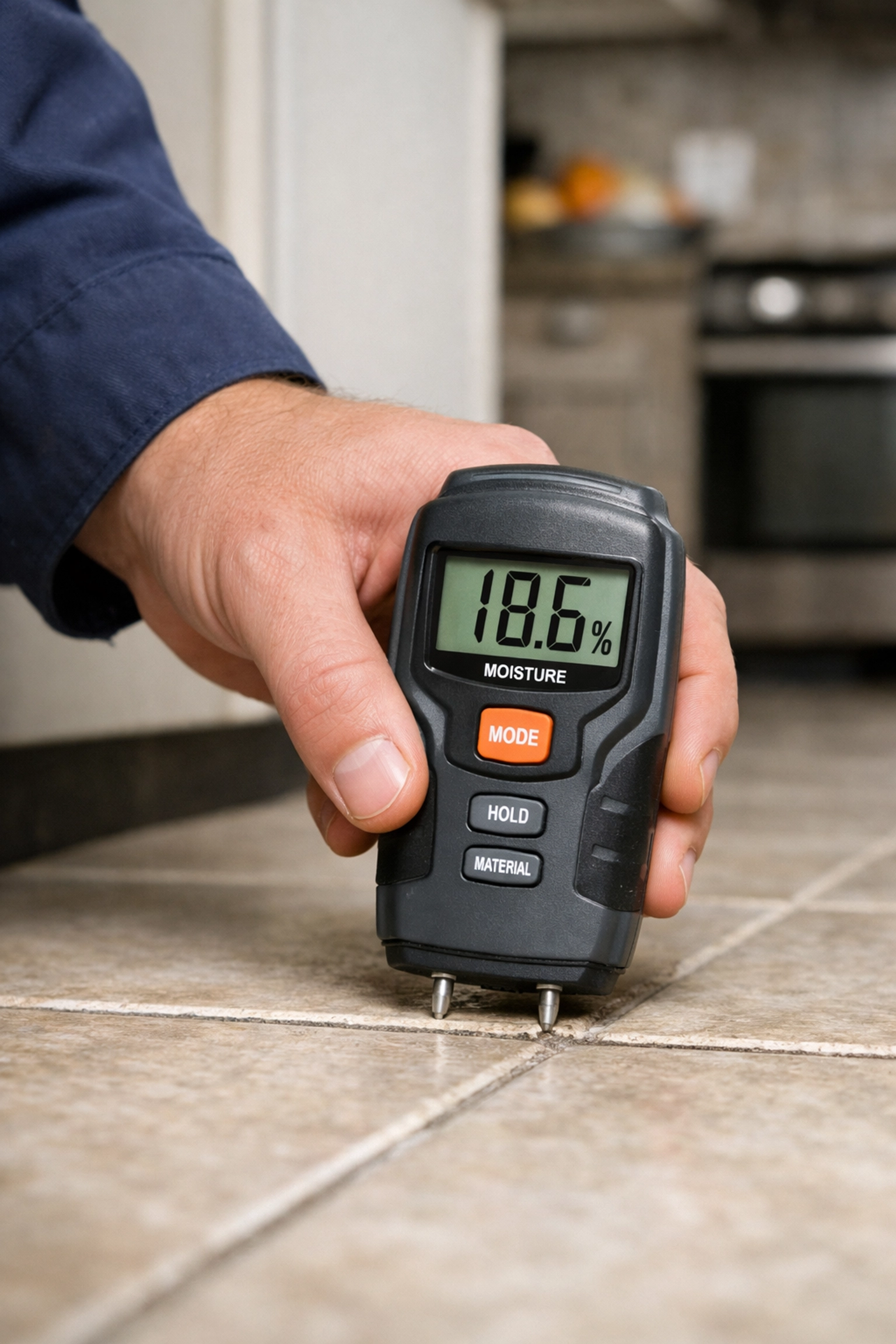
- Assess and document moisture(meters, thermal imaging, mapping affected areas)
- Stop the water source(often coordinated with a plumber: restoration teams don’t usually do plumbing repairs)
- Dry the structure properly(airflow + dehumidification, and containment if needed)
- Remove damaged materials if they can’t be dried(depends on material type and contamination risk)
- Address microbial growth if present
- Monitor until dry goals are met
That’s the core of water damage restoration: https://www.drymaxrestoration.com/water-damage-restoration/
And if you want to read more scenarios like this (leaks, floods, mold, etc.), Drymax posts updates here: https://www.drymaxrestoration.com/blog/
Prevention tips that actually help in Southern Louisiana
You can’t control the weather or the soil, but you can reduce your odds of dealing with a slab leak emergency.
Manage water around your foundation
- Keep gutters clear
- Make sure downspouts move water away from the house
- Fix grading issues where water pools against the slab
This helps keep soil moisture swings more stable.
Know where your main shutoff is (and make sure it works)
When you need it, you need it fast.
Insulate exposed plumbing (especially around exterior walls and garages)
A lot of freeze-related breaks happen where pipes are closer to outside air.
Don’t ignore small plumbing symptoms
- pressure fluctuations
- water hammer
- intermittent hot water issues
These aren’t always slab-leak signs, but they can point to stress in the system.
After a freeze, do a quick “house lap”
Ten minutes of checking floors, baseboards, and the meter can save you a lot of hassle later.
When it’s time to get help
If you suspect a slab leak: especially after a freeze: don’t wait until the floor is soaked. If you’ve got:
- damp flooring
- unexplained water use
- musty odor that’s sticking around
- visible staining near baseboards
- signs of moisture in multiple rooms
…that’s the moment to bring in pros for moisture detection and drying, and coordinate with a plumber for the actual pipe repair.
Drymax contact page (Southern Louisiana): https://www.drymaxrestoration.com/contact-us/