Space Heaters & Extension Cords: Avoiding the #1 cause of winter house fires in the Bayou
Space Heaters & Extension Cords: Avoiding the #1 cause of winter house fires in the Bayou
![[HERO] Space Heaters & Extension Cords: Avoiding the #1 cause of winter house fires in the Bayou](https://cdn.marblism.com/vEEplDyUhfk.webp)
Look, I get it. Down here in Southern Louisiana, we don't exactly have our homes built for Minnesota winters. Most of us have decent AC units that could freeze a margarita in ten seconds flat, but when that weird cold snap rolls through, the kind where it's 28 degrees and the newscasters start acting like it's the apocalypse, we're scrambling for whatever heat we can find.
And that's usually when the space heaters come out of the closet, get plugged into whatever extension cord is lying around, and suddenly we're all playing a dangerous game we didn't sign up for.
I'm not trying to be dramatic here. The truth is, space heaters and extension cords are the leading cause of winter house fires across the country, and Louisiana is definitely not immune. Every year, especially during those cold fronts that blow through Lafayette, Baton Rouge, Lake Charles, and the rest of the Bayou, fire departments see a spike in house fires caused by these little "portable warmth machines" that we all think are harmless.
Spoiler alert: they're not.
Why We're All Using Space Heaters in the First Place
Let's be real. Most homes around here were designed to handle heat and humidity, not cold. Our insulation is thin. Our windows let in drafts. And our central heating systems? Well, they exist, but they're usually overworked, underpowered, or just plain old.
So when that cold front comes through, and you know the one I'm talking about, the one where you can see your breath inside your own house, you run to Walmart, grab a $30 space heater, plug it into whatever outlet is closest, and hope it does the trick.
Here's the problem: space heaters draw a lot of power. We're talking 1,500 watts on average. That's like running 15 hundred-watt light bulbs at the same time. Your standard household outlet can handle that... but your cheap orange extension cord from the garage? Not so much.
The Extension Cord Trap: Why This Combo Is So Dangerous
Alright, let's talk about the number one mistake people make: plugging a space heater into an extension cord.
I know, I know. The outlet is on the other side of the room. The cord that came with the heater is only like three feet long. You just need it to reach the couch or the spot by your bed where your feet are freezing. So you grab whatever extension cord you have lying around and call it a day.
Here's what happens next.
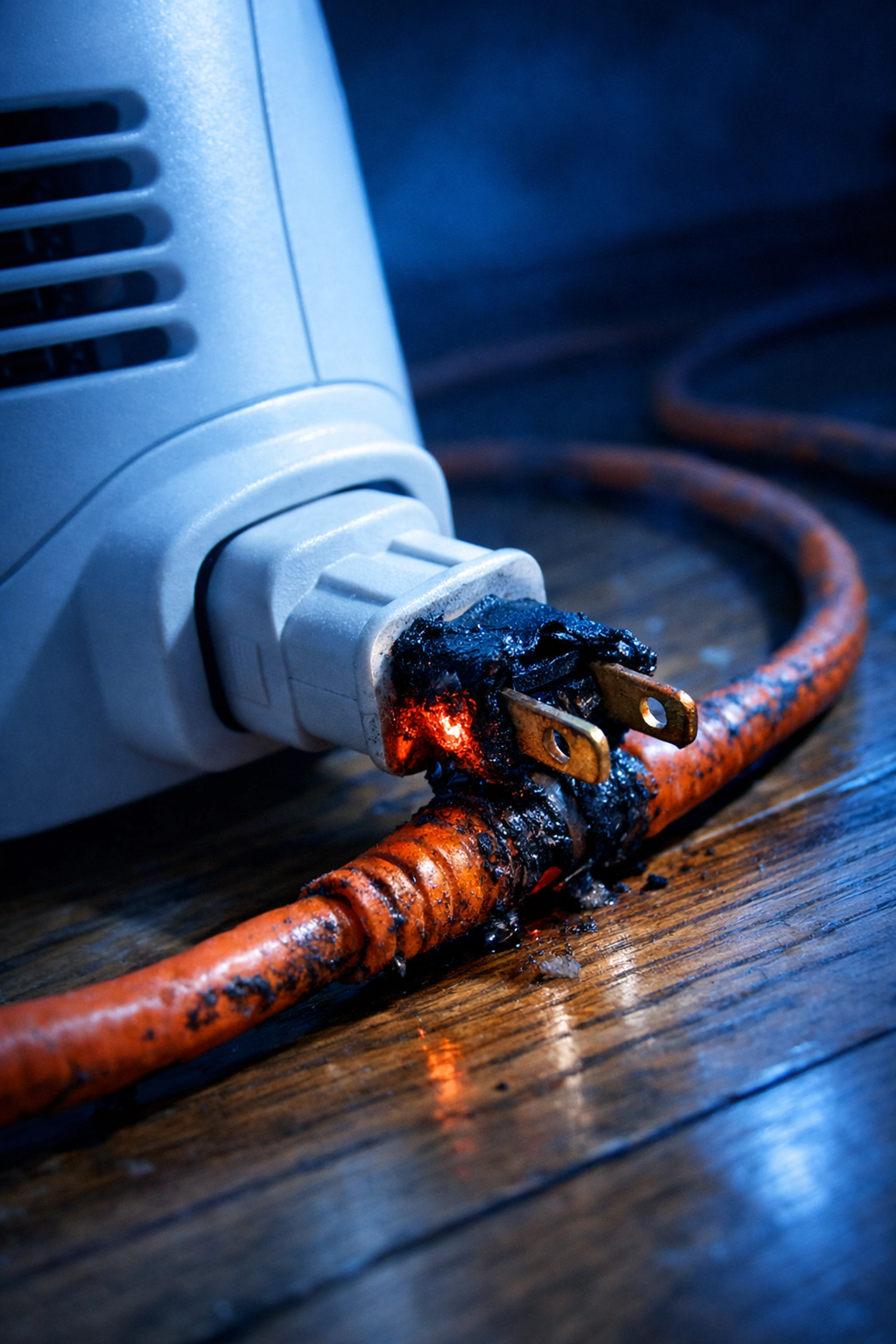
That extension cord wasn't designed to handle 1,500 watts. Most basic extension cords you buy at the dollar store or dig out of your shed are rated for maybe 13 amps max, and that's being generous. A space heater on high pulls closer to 12.5 amps, which means you're running that cord right at its limit.
When an extension cord gets overloaded, it heats up. Sometimes it gets really hot. Hot enough to melt the plastic coating. Hot enough to start sparking. And if that cord is buried under a rug, tucked behind a couch, or lying on top of something flammable? You've got yourself a recipe for disaster.
The scary part? You might not even notice. There's no big alarm that goes off. Just a slow buildup of heat until something ignites. By the time you smell burning plastic, it might already be too late.
The 3-Foot Rule (And Why It Actually Matters)
So let's say you're smart. You skip the extension cord altogether and plug your space heater straight into the wall. Good start. But now we need to talk about the 3-foot rule.
This is the one safety tip you'll see plastered all over space heater manuals, fire safety websites, and literally anywhere someone's trying to keep you from burning your house down: Keep your space heater at least three feet away from anything that can burn.
That means:
- Curtains
- Blankets
- Couches
- Beds
- Clothes
- Pet beds
- Rugs
- That pile of laundry you swear you're going to fold later
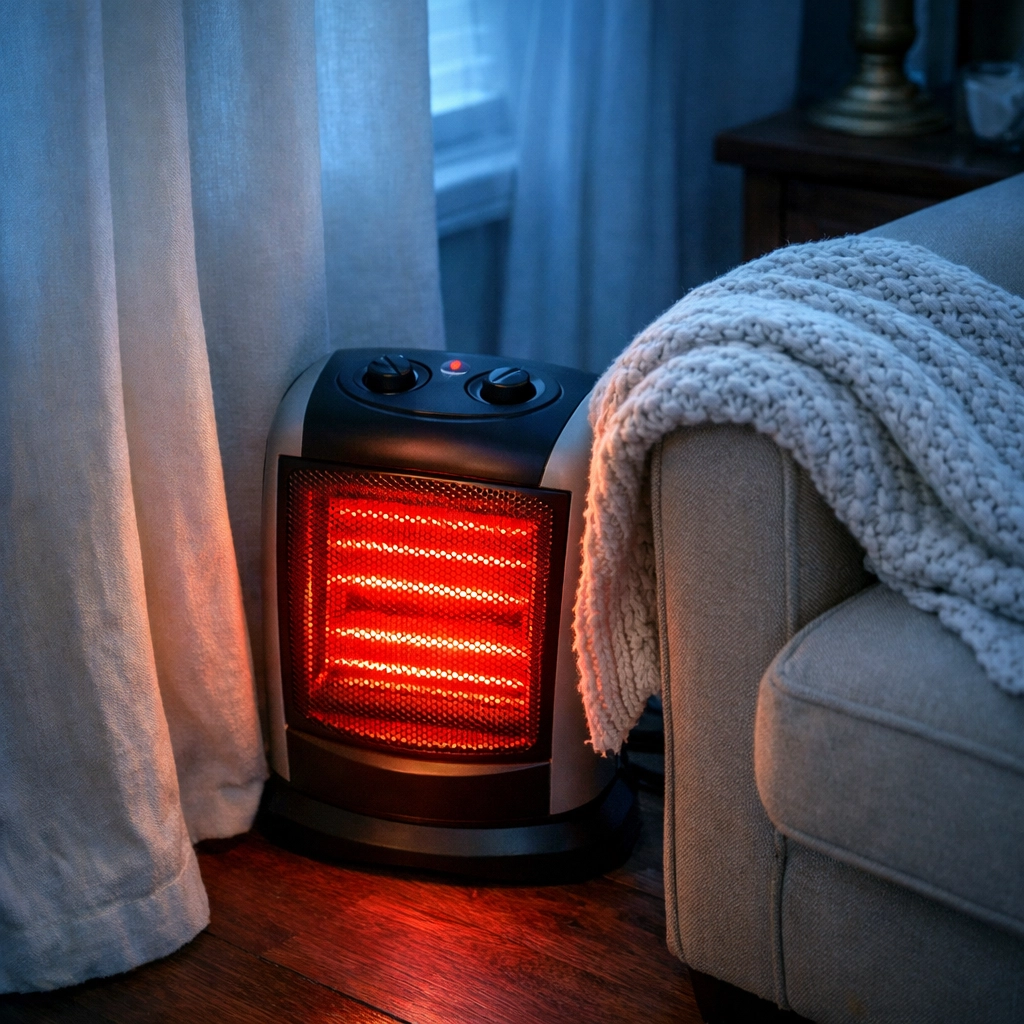
I've seen it a hundred times during restoration jobs. Somebody sets up their space heater right next to the bed because they want to be warm while they sleep. They throw a blanket over themselves, it slips off the bed overnight, lands on the heater, and boom, house fire.
Or they put the heater near the curtains because that's where the draft is coming from. The fabric gets too close, ignites, and suddenly the whole living room is up in flames.
The 3-foot rule isn't some arbitrary suggestion. It's based on actual fire science. Space heaters get hot , like, hot enough to ignite fabric within seconds if it's too close. Three feet is the minimum safe distance to keep radiant heat from causing a problem.
And honestly? If you can give it more space, do it. There's no medal for getting your heater as close as possible to flammable stuff.
The "Set It and Forget It" Problem
Here's another thing people do that drives me crazy: they turn on the space heater, leave the room, and forget about it.
Look, I understand. You want your bedroom warm before you go to sleep. You want the living room toasty while you're cooking dinner. But space heaters are not "set it and forget it" devices. They need supervision.
If you're not in the room, the heater shouldn't be on. Period.
Why? Because things change. Your cat might knock something over. A kid might toss a toy near it. The heater itself might tip over (even the ones with the automatic shutoff feature don't always work). And if nobody's there to notice the problem, a small issue turns into a big one real fast.
The National Fire Protection Association (NFPA) backs this up, they recommend that space heaters should always be turned off when you leave the room or go to bed. It's not about being paranoid. It's about being smart.
What to Do If You Smell Something Burning
Okay, so let's say you've done everything wrong. You plugged your space heater into an extension cord, set it up next to your couch, and left it running while you went to grab groceries. You come home, and you smell something... off. Like burning plastic or that weird electrical smell that makes your stomach drop.
Here's what you do:
- Turn off the heater immediately. Unplug it from the wall. Don't just flip the switch, actually disconnect it.
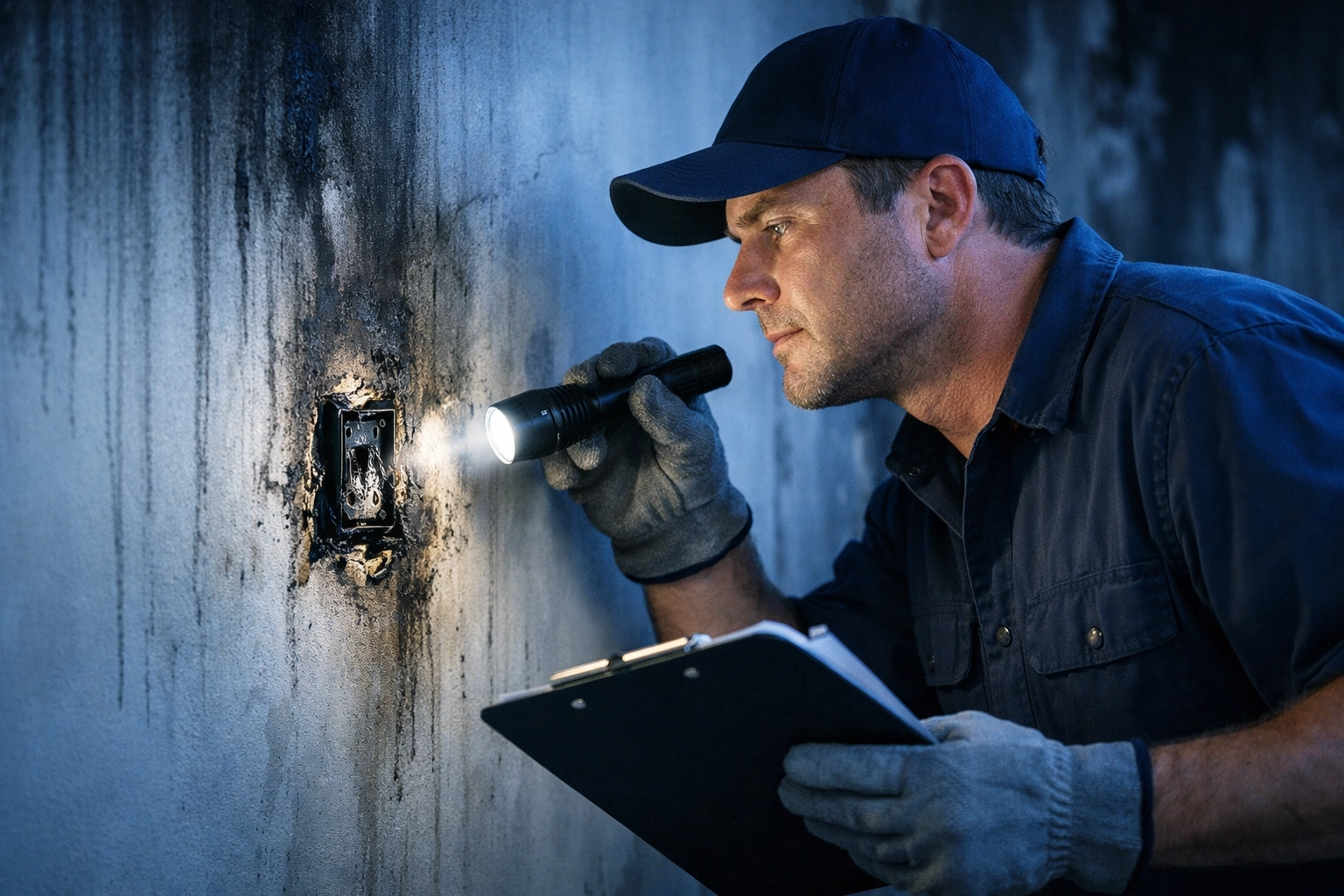
- Check the cord and outlet. Is the cord hot to the touch? Is it melted or discolored? Is the outlet blackened or charred? If yes to any of these, you need to call an electrician before you use that outlet again.
- Ventilate the area. Open windows, turn on fans, get some fresh air moving through the house.
- If you see smoke or flames, get out. Don't try to be a hero. Call 911 from outside the house and let the professionals handle it.
Even if the fire doesn't spread, you might be dealing with smoke damage or electrical damage that needs professional attention. That's where fire damage restoration comes in, and trust me, it's not something you want to DIY.
How Fire Damage Restoration Works (And Why You Need It)
If you've had a small electrical fire, maybe the extension cord sparked and scorched the wall, or the space heater ignited a blanket and you caught it in time, you might think you can just clean it up yourself and move on.
Here's the thing: fire damage is more than just the visible burn marks. There's smoke residue that gets into your walls, your HVAC system, and your belongings. There's the smell, that acrid, lingering smoke odor that no amount of Febreze is going to cover. And there might be structural damage you can't see, especially if the fire got into electrical wiring or insulation.
That's where a company like Drymax comes in. We handle fire damage restoration all over Southern Louisiana, and we've seen every kind of space heater disaster you can imagine.
Our process usually includes:
- Assessing the damage: We figure out what's been affected, walls, floors, ceilings, contents, electrical systems, HVAC.
- Removing smoke and soot: This isn't just wiping things down. We use specialized equipment to clean surfaces and remove residue that can cause long-term damage and health issues.
- Odor removal: Smoke smell doesn't just disappear. We use professional smoke odor removal techniques like ozone treatment, thermal fogging, and air scrubbers to actually neutralize the odor at the molecular level.
- Contents cleaning: Your furniture, clothes, and personal items can often be saved with the right contents cleaning methods.
- Restoration and repairs: Once everything's clean, we repair or rebuild whatever was damaged, drywall, flooring, paint, trim, etc.
The goal is to make it like the fire never happened. And honestly, the sooner you call us after a fire, the better the outcome. Smoke and soot can cause permanent staining and corrosion if they're left to sit.
Other Common Winter Fire Hazards (Because Space Heaters Aren't the Only Problem)
While we're on the topic of winter fire safety, let's talk about the other ways people accidentally burn their houses down this time of year.
Cooking fires are huge, especially around the holidays. I mean, who doesn't love a good deep-fried turkey or a kitchen full of pots on the stove? But it only takes one distraction, one overheated pot of oil, or one towel left too close to the burner, and you've got a problem. We covered this in detail in our post on holiday cooking fire safety.
Candles are another one. They're cozy, they smell nice, but if you leave them unattended or put them near anything flammable, they're dangerous.
Fireplaces and wood stoves that haven't been cleaned or maintained properly can cause chimney fires. Down here in Louisiana, we don't use these as much, but when we do, people often forget that they need regular maintenance.
If you want a deeper dive into the most common fire hazards, check out our posts on the three common causes of home fires and the most common causes of house fires.
Practical Tips to Keep Your Home Safe This Winter
Alright, let's wrap this up with some actual, actionable advice you can use right now to keep your family safe.
1. Never plug a space heater into an extension cord. Plug it directly into a wall outlet. If the cord isn't long enough, move the heater or pick a different spot.
2. Keep it three feet away from anything flammable. No exceptions. No shortcuts.
3. Turn it off when you leave the room or go to bed. Don't let it run unattended.
4. Don't use a heater with a frayed cord or damaged plug. If it looks sketchy, it is sketchy. Toss it and get a new one.
5. Look for heaters with safety features. Tip-over shutoff and overheat protection are worth the extra few bucks.
6. Keep pets and kids away from space heaters. Curious cats and toddlers don't mix well with hot surfaces.
7. Test your smoke detectors. Seriously. Right now. Go hit the test button. If they're not working, put in new batteries or replace them entirely.
8. Have a fire extinguisher handy. Keep one in the kitchen and one near wherever you're using a space heater. Learn how to use it before you need it.
We put together a full guide on fireproofing your Louisiana home if you want more detailed safety tips.
Final Thoughts: Stay Warm, Stay Safe
Winter in Southern Louisiana might not be as brutal as other parts of the country, but when it gets cold, it gets real. And the last thing you want is to turn a simple solution: like a space heater: into a catastrophe.
Space heaters are fine. Extension cords are fine. But together? That's where things go sideways. Keep them separated, keep them supervised, and keep three feet of clearance around anything hot.
And if something does go wrong: if you have a small fire, smell smoke, or see any signs of electrical damage: don't mess around. Call the fire department first, then call a professional restoration team to handle the aftermath.
We've worked with families all over Lafayette, Baton Rouge, Lake Charles, Houma, and the rest of the Bayou to recover from fire damage, and the one thing we always hear is, "I wish I'd known this sooner." So now you do. Stay warm, stay safe, and don't let your winter heating plan turn into a disaster.
If you ever need help with fire damage restoration or just have questions about fire safety, you can reach out to Drymax anytime. We're here to help.